How to Use AI in Marketing: Beginner’s Guide (2026 Edition)
Nov 24, 2025
Nov 24, 2025


In 2026, AI, or artificial intelligence, has changed the way marketing teams function. It has demolished the concept of investing in a highly skilled marketing team and completely erased repetitive tasks through automation. If you’re a business owner, marketer, or even a freelancer decoding how to use AI in marketing, then you’re at the right place.
The initial questions before adopting AI into your marketing workflow will include, Where to start? Which AI tools to consider? How much will it cost? And will it actually work for your business? We analyzed the role of AI in marketing so you can get the answer to all these questions and understand why this transition is a necessity and not a choice.
What is AI in Marketing?
AI in marketing is all about replacing traditional methods of marketing with AI tools that make your team more efficient. AI can improve customer targeting and content generation time, create personalized campaigns, and give your team a better direction regardless of technical knowledge or team size.
Unlike traditional marketing, AI marketing helps marketers strategize, optimize, automate, and increase ROI, making it the biggest shift of 2026. Let us understand the role of AI in marketing to know why this is a necessary transition.
Understanding The Role Of AI In Marketing
To understand the core use of AI in marketing, we need to deep dive into how it improves marketing functions and roles.
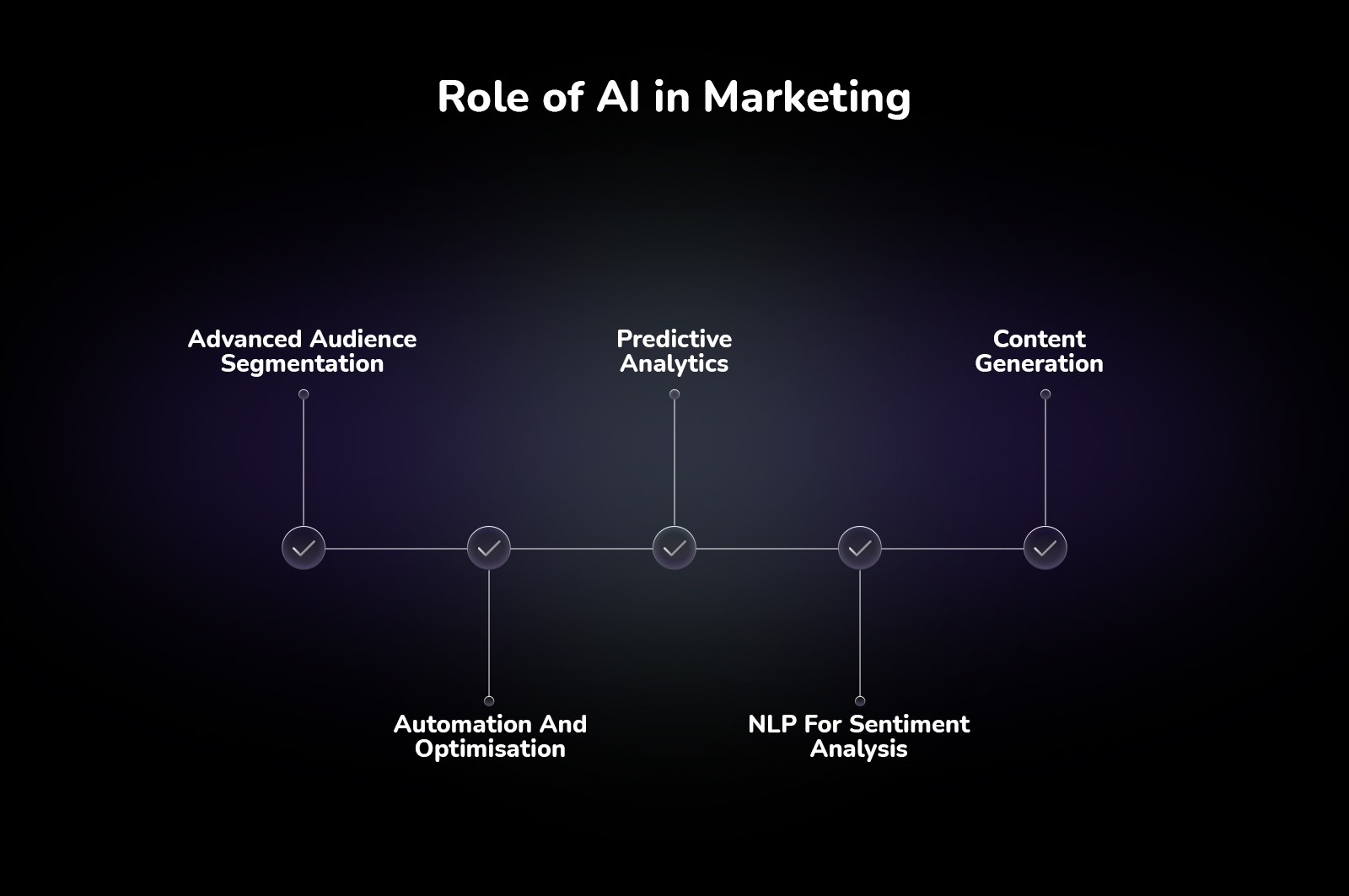
Advanced Audience Segmentation
Machine learning models can accommodate large amounts of data and audience segmentation. This allows marketers to analyze a general audience and gather the required information to efficiently use it for different ad campaigns. This makes personalization according to niche audiences faster and easier.
Automation and Optimization
The role of AI in marketing has enabled marketers to become more efficient with their existing resources. In traditional marketing the quality of phone calls that came in through a campaign was a grey area.
But with the integration of AI in the workflow, the quality of phone calls can now be assessed, and integral changes can be made to optimize the campaign and bring in more relevant leads.
Automation of marketing tasks has drastically changed how marketing teams function. Marketers and freelancers can now automate repetitive tasks, including email marketing, social media posting, and generating reports. This enables them to utilize their time more efficiently for creativity and strategizing.
Predictive Analytics
AI can easily analyze large amounts of past data and spot user patterns. These patterns are then used to categorize users according to past behavior to determine their likelihood to make a purchase. This is an essential AI use case for e-commerce owners to retarget customers in case of cart abandonment and search history.
Natural Language Processing for Sentiment Analysis
AI in 2026 has the ability to understand sentiments through natural language processing.
NLP helps marketers in analyzing large amounts of data on social media and analyzing sentiments to create hyper-personalized campaigns.

Content Generation
AI has given marketers the advantage of reducing the time between spotting a trend, integrating their brand’s vibe, and producing content. This is how vibe marketing has evolved how marketing teams function across the globe. AI tools can now create hyper-realistic images, videos, ad copies, long-form content, and UGC videos within minutes.
How to Use AI in Marketing?
Define Your Objective
To get started on how to use AI for marketing, you must begin with analyzing your current workflow, spot tasks that are the most time-consuming, analyze your end goal with AI adoption, and understand where your team struggles the most. Once you have the answers to all these questions, you can move on to the next stage of AI adoption for marketing.
Select The Right Tools
Choosing the right AI tool is the biggest challenge in this transition, and doing it strategically is the right way. Start by selecting one task and using an AI tool to analyze it. All AI tools have a trial period, use it to your advantage and test all features to make sure it meets your team’s needs before committing to an annual subscription.
Set Up Automation
Use of AI in marketing for automation is the most efficient way of saving time and money on repetitive tasks. Automate the tasks that require the most resources and time to free up time for strategizing and planning future campaigns.
AI marketing tools like Vibelets have distinctive features such as content generation and optimization. With the help of automation tools like N8N, you can create a content generation machine, thus producing content effortlessly.

2026 and The Use of AI in Marketing
In 2026 brands are able to compete with giants in the market with the help of AI. Unlike traditional marketing, AI marketing is far more flexible, scalable, and efficient. This makes it an accessible strategy for brands considering making the switch from traditional to AI marketing.
Vibelets is a great tool for anyone who does marketing on their own, as a freelancer, as a small business owner, as part of a small marketing team or is learning how to use AI in marketing. Vibelets can do everything from making content to planning the whole campaign from the ground up.
Join the waitlist today- https://vibelets.ai/
In 2026, AI, or artificial intelligence, has changed the way marketing teams function. It has demolished the concept of investing in a highly skilled marketing team and completely erased repetitive tasks through automation. If you’re a business owner, marketer, or even a freelancer decoding how to use AI in marketing, then you’re at the right place.
The initial questions before adopting AI into your marketing workflow will include, Where to start? Which AI tools to consider? How much will it cost? And will it actually work for your business? We analyzed the role of AI in marketing so you can get the answer to all these questions and understand why this transition is a necessity and not a choice.
What is AI in Marketing?
AI in marketing is all about replacing traditional methods of marketing with AI tools that make your team more efficient. AI can improve customer targeting and content generation time, create personalized campaigns, and give your team a better direction regardless of technical knowledge or team size.
Unlike traditional marketing, AI marketing helps marketers strategize, optimize, automate, and increase ROI, making it the biggest shift of 2026. Let us understand the role of AI in marketing to know why this is a necessary transition.
Understanding The Role Of AI In Marketing
To understand the core use of AI in marketing, we need to deep dive into how it improves marketing functions and roles.

Advanced Audience Segmentation
Machine learning models can accommodate large amounts of data and audience segmentation. This allows marketers to analyze a general audience and gather the required information to efficiently use it for different ad campaigns. This makes personalization according to niche audiences faster and easier.
Automation and Optimization
The role of AI in marketing has enabled marketers to become more efficient with their existing resources. In traditional marketing the quality of phone calls that came in through a campaign was a grey area.
But with the integration of AI in the workflow, the quality of phone calls can now be assessed, and integral changes can be made to optimize the campaign and bring in more relevant leads.
Automation of marketing tasks has drastically changed how marketing teams function. Marketers and freelancers can now automate repetitive tasks, including email marketing, social media posting, and generating reports. This enables them to utilize their time more efficiently for creativity and strategizing.
Predictive Analytics
AI can easily analyze large amounts of past data and spot user patterns. These patterns are then used to categorize users according to past behavior to determine their likelihood to make a purchase. This is an essential AI use case for e-commerce owners to retarget customers in case of cart abandonment and search history.
Natural Language Processing for Sentiment Analysis
AI in 2026 has the ability to understand sentiments through natural language processing.
NLP helps marketers in analyzing large amounts of data on social media and analyzing sentiments to create hyper-personalized campaigns.

Content Generation
AI has given marketers the advantage of reducing the time between spotting a trend, integrating their brand’s vibe, and producing content. This is how vibe marketing has evolved how marketing teams function across the globe. AI tools can now create hyper-realistic images, videos, ad copies, long-form content, and UGC videos within minutes.
How to Use AI in Marketing?
Define Your Objective
To get started on how to use AI for marketing, you must begin with analyzing your current workflow, spot tasks that are the most time-consuming, analyze your end goal with AI adoption, and understand where your team struggles the most. Once you have the answers to all these questions, you can move on to the next stage of AI adoption for marketing.
Select The Right Tools
Choosing the right AI tool is the biggest challenge in this transition, and doing it strategically is the right way. Start by selecting one task and using an AI tool to analyze it. All AI tools have a trial period, use it to your advantage and test all features to make sure it meets your team’s needs before committing to an annual subscription.
Set Up Automation
Use of AI in marketing for automation is the most efficient way of saving time and money on repetitive tasks. Automate the tasks that require the most resources and time to free up time for strategizing and planning future campaigns.
AI marketing tools like Vibelets have distinctive features such as content generation and optimization. With the help of automation tools like N8N, you can create a content generation machine, thus producing content effortlessly.

2026 and The Use of AI in Marketing
In 2026 brands are able to compete with giants in the market with the help of AI. Unlike traditional marketing, AI marketing is far more flexible, scalable, and efficient. This makes it an accessible strategy for brands considering making the switch from traditional to AI marketing.
Vibelets is a great tool for anyone who does marketing on their own, as a freelancer, as a small business owner, as part of a small marketing team or is learning how to use AI in marketing. Vibelets can do everything from making content to planning the whole campaign from the ground up.
Join the waitlist today- https://vibelets.ai/
In 2026, AI, or artificial intelligence, has changed the way marketing teams function. It has demolished the concept of investing in a highly skilled marketing team and completely erased repetitive tasks through automation. If you’re a business owner, marketer, or even a freelancer decoding how to use AI in marketing, then you’re at the right place.
The initial questions before adopting AI into your marketing workflow will include, Where to start? Which AI tools to consider? How much will it cost? And will it actually work for your business? We analyzed the role of AI in marketing so you can get the answer to all these questions and understand why this transition is a necessity and not a choice.
What is AI in Marketing?
AI in marketing is all about replacing traditional methods of marketing with AI tools that make your team more efficient. AI can improve customer targeting and content generation time, create personalized campaigns, and give your team a better direction regardless of technical knowledge or team size.
Unlike traditional marketing, AI marketing helps marketers strategize, optimize, automate, and increase ROI, making it the biggest shift of 2026. Let us understand the role of AI in marketing to know why this is a necessary transition.
Understanding The Role Of AI In Marketing
To understand the core use of AI in marketing, we need to deep dive into how it improves marketing functions and roles.

Advanced Audience Segmentation
Machine learning models can accommodate large amounts of data and audience segmentation. This allows marketers to analyze a general audience and gather the required information to efficiently use it for different ad campaigns. This makes personalization according to niche audiences faster and easier.
Automation and Optimization
The role of AI in marketing has enabled marketers to become more efficient with their existing resources. In traditional marketing the quality of phone calls that came in through a campaign was a grey area.
But with the integration of AI in the workflow, the quality of phone calls can now be assessed, and integral changes can be made to optimize the campaign and bring in more relevant leads.
Automation of marketing tasks has drastically changed how marketing teams function. Marketers and freelancers can now automate repetitive tasks, including email marketing, social media posting, and generating reports. This enables them to utilize their time more efficiently for creativity and strategizing.
Predictive Analytics
AI can easily analyze large amounts of past data and spot user patterns. These patterns are then used to categorize users according to past behavior to determine their likelihood to make a purchase. This is an essential AI use case for e-commerce owners to retarget customers in case of cart abandonment and search history.
Natural Language Processing for Sentiment Analysis
AI in 2026 has the ability to understand sentiments through natural language processing.
NLP helps marketers in analyzing large amounts of data on social media and analyzing sentiments to create hyper-personalized campaigns.

Content Generation
AI has given marketers the advantage of reducing the time between spotting a trend, integrating their brand’s vibe, and producing content. This is how vibe marketing has evolved how marketing teams function across the globe. AI tools can now create hyper-realistic images, videos, ad copies, long-form content, and UGC videos within minutes.
How to Use AI in Marketing?
Define Your Objective
To get started on how to use AI for marketing, you must begin with analyzing your current workflow, spot tasks that are the most time-consuming, analyze your end goal with AI adoption, and understand where your team struggles the most. Once you have the answers to all these questions, you can move on to the next stage of AI adoption for marketing.
Select The Right Tools
Choosing the right AI tool is the biggest challenge in this transition, and doing it strategically is the right way. Start by selecting one task and using an AI tool to analyze it. All AI tools have a trial period, use it to your advantage and test all features to make sure it meets your team’s needs before committing to an annual subscription.
Set Up Automation
Use of AI in marketing for automation is the most efficient way of saving time and money on repetitive tasks. Automate the tasks that require the most resources and time to free up time for strategizing and planning future campaigns.
AI marketing tools like Vibelets have distinctive features such as content generation and optimization. With the help of automation tools like N8N, you can create a content generation machine, thus producing content effortlessly.

2026 and The Use of AI in Marketing
In 2026 brands are able to compete with giants in the market with the help of AI. Unlike traditional marketing, AI marketing is far more flexible, scalable, and efficient. This makes it an accessible strategy for brands considering making the switch from traditional to AI marketing.
Vibelets is a great tool for anyone who does marketing on their own, as a freelancer, as a small business owner, as part of a small marketing team or is learning how to use AI in marketing. Vibelets can do everything from making content to planning the whole campaign from the ground up.
Join the waitlist today- https://vibelets.ai/